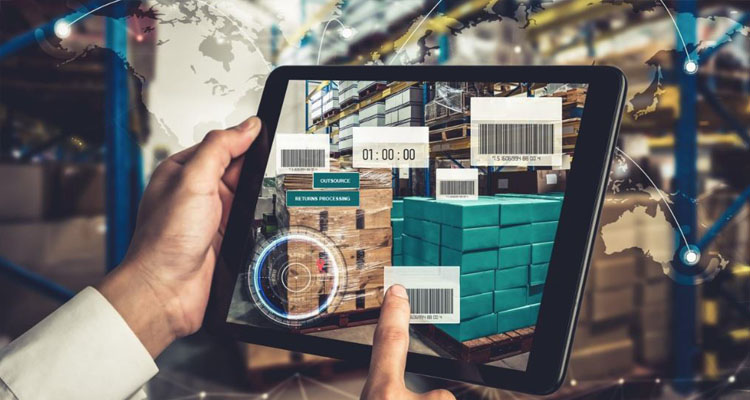
Most retailers and brands have their infrastructure, processes, systems and manpower aligned to handle new inventory in the forward supply chain. However, the uncertainty in the timing, volume and condition of returns, along with variability in their processing based on condition, return policies, brand policies, etc., makes it essential to outsource returns management to a specialized partner. The infrastructure, processes, systems and skilled manpower required to efficiently handle the complexities of reverse logistics have been illustrated ahead.
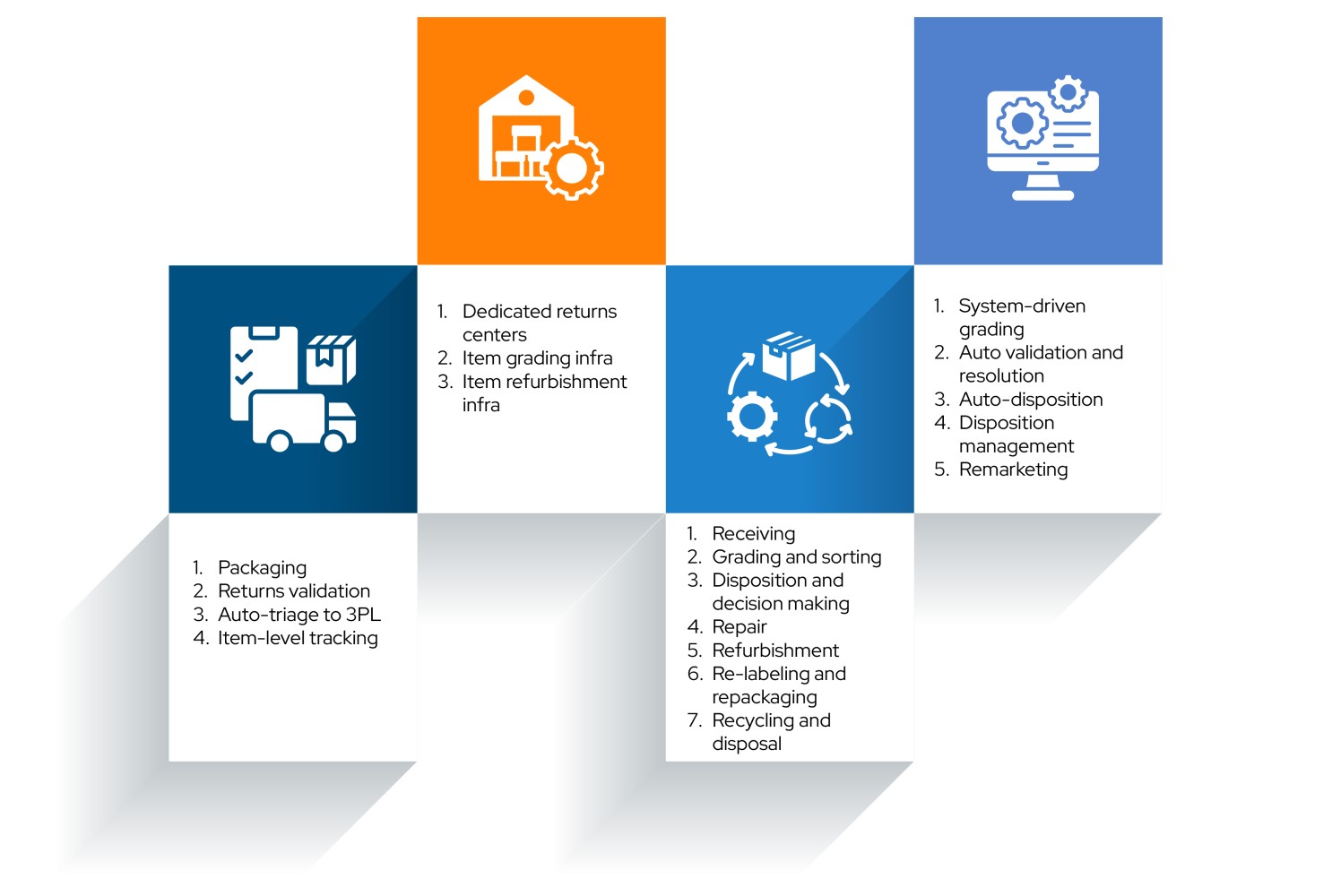
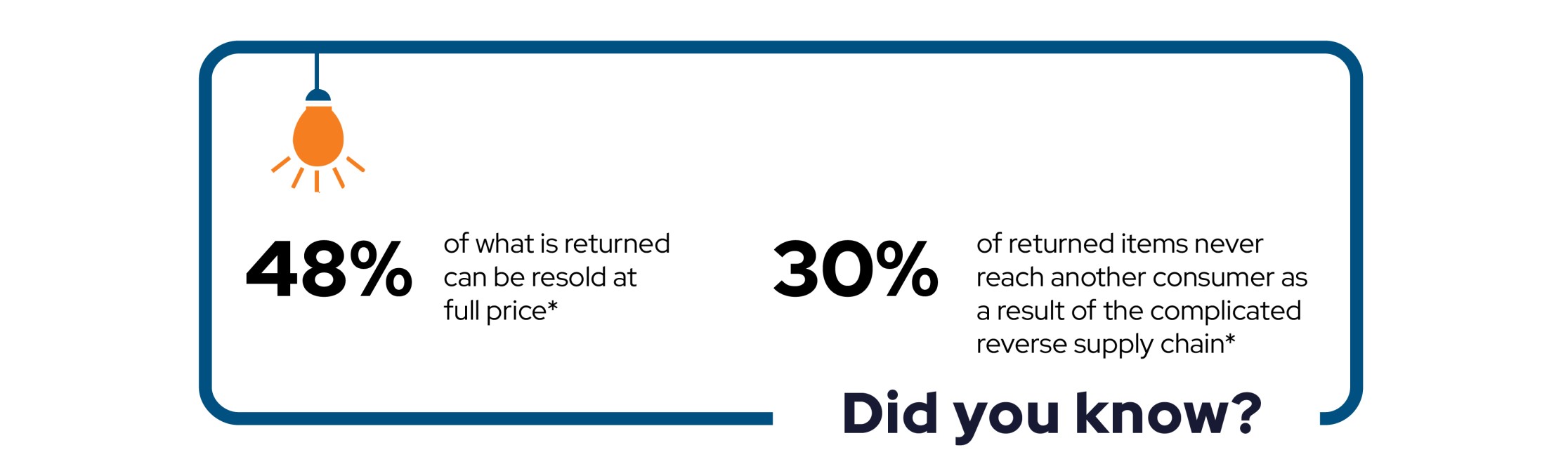
*Source: Gartner Survey, KPMG [Future proof your reverse logistics]
A client can certainly create its own return centers; however, this approach can bring the following challenges:
A specialized reverse supply chain partner can provide a plug-and-play returns management solution with the required systems, infrastructure and skilled manpower. Such an integrated technology solution can enable seamless information exchange across functions, helping with efficient returns handling and value recovery.
Also, the decentralized return centers provided by the specialist can substantially reduce the movement of items and reduce the overall processing time.
By outsourcing returns management, clients gain access to scalable solutions tailored to their specific needs.
Below are certain key benefits that a specialized reverse supply chain partner can bring to any client:
System-driven grading during returns pickup can help validate items and eliminate unwarranted returns. Also, it helps create the digital trail of returns that allows a better understanding of customer preferences and product issues, which can be leveraged to reduce future returns.
System-driven processes can help eliminate incorrect grading or disposition, which results in revenue leakage. Also, item-level tracking will ensure that time-sensitive claims, such as RTV and insurance, are not missed, thus ensuring higher recovery. Additionally, item-level granular insights across the full return lifecycle will allow clients to identify opportunities to improve processes and eliminate revenue leakage.
Automation of returns process steps such as item inspection, item reconciliation at the warehouse, item disposition allocation, item disposition management and remarketing will help improve operational efficiencies and reduce processing costs associated with returned products. Decentralized returns centers can help manage returns closer to your customer and thus cut logistics costs along with the risk of further in-transit damage.
To prevent inventory value loss, many organizations outsource returns management to partners who can process returns swiftly.
By virtue of multiple decentralized returns centers, returned items processing does not compete for resources and infrastructure with fresh orders processing. As a result, faster returns processing reduces inventory value deterioration caused by delays. Also, shared return centers from a specialist can enable refurbishment when required, to make the inventory resellable or have better recovery.
Lastly, selling or liquidating graded inventory in the secondary market will help improve the speed and realization from remarketing.
A reverse supply chain partner/specialist can take away the burden of managing returns while ensuring complete transparency and control through an integrated reverse supply chain management system. This will allow the management team more time to focus on the core business and its growth. Furthermore, the dedicated decentralized returns centers can enable seamless processing of returns, agnostic of seasonal volume variation without choking the warehouses meant for outbound processing.
Granular insights into the returns reasons including process or product issues will allow retailers and brands to improve processes and product mixes, which helps improve customer experience and thus transform a transactional customer into a brand loyalist.
Multiple shared returns centers can help reduce the logistical hops that a returned item must go through. This will not only reduce waste generation but also cut down the carbon footprint.
An efficient reverse supply chain, managed by a specialist that brings the system and ability for grading, refurbishing and remarketing will ensure that returned items are put back in the hands of new users instead of going into a landfill.
The ability to track every item’s movement throughout the returns lifecycle can provide visibility into the carbon footprint generated and helps identify opportunities to reduce the same.
So, it is worth considering outsourcing the reverse supply chain to a specialized partner who can take over all related complexities of returns claim management while freeing the client's management bandwidth to focus on new sales and growth.
Read to learn how a multi-store organized retailer with high ageing and revenue losses from returned inventory overcame their returns management challenges.
No match found!

Large mobile retail chain struggling with trade-in program
Blubirch became the first ever Indian company to become one of the top 3 providers of reverse...
12th Apr 2023 • 8 min
Creating sustainable value in reverse supply chain
Blubirch became the first ever Indian company to become one of the top 3 providers of reverse...
12th Apr 2023 • 8 min
How manual returns management process for an OEM functions?
Blubirch became the first ever Indian company to become one of the top 3 providers of reverse...
12th Apr 2016 • 8 min
How technology brings transparency to the reverse inventory supply chain
Blubirch became the first ever Indian company to become one of the top 3 providers of reverse...
12th Apr 2023 • 8 min

 Linkedin
 Twitter
 Facebook
 Email
Email